The True Cost and Savings of AI-Native Web Development

Building a business website used to mean choosing between two extremes: spending weeks wrestling with a DIY template or handing over $5,000 to $30,000+ to a digital agency.
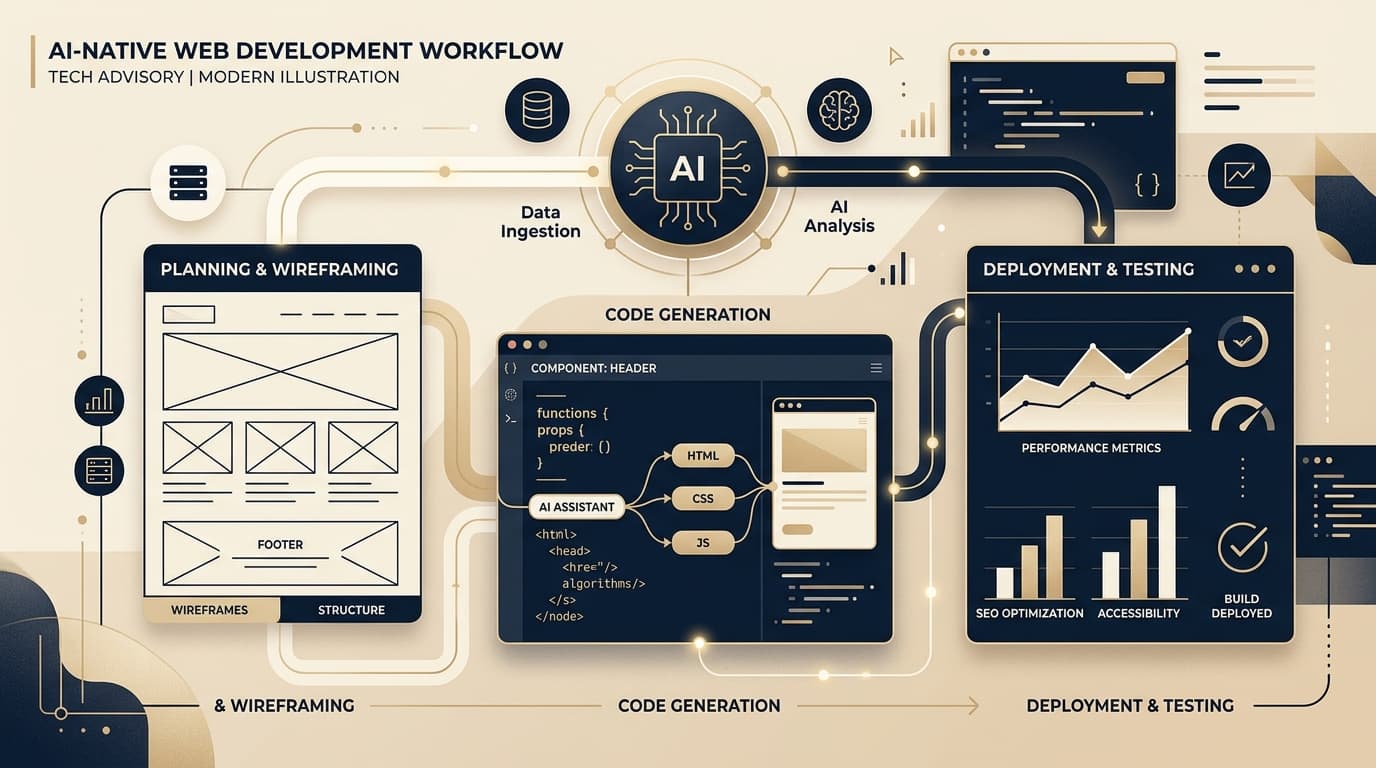
Today, a third model has taken center stage: AI-native web development companies and studios. By combining human creative direction with automated design, coding, and content pipelines, these firms deliver agency-grade results at a fraction of traditional costs and timelines.
How much do you actually save?
On average, businesses save 50% to 75% on upfront development costs and reduce turnaround time by up to 80% when partnering with an AI-driven studio over a conventional agency.
Here is a full breakdown of the numbers, cost drivers, and long-term tradeoffs.
1. Upfront Cost Comparison: AI Agency vs. Traditional Agency
Website pricing depends heavily on complexity, page count, and custom functionality. The following table reflects current industry averages:
| Website Scope | Traditional Agency | AI-Native Studio | Estimated Savings |
|---|---|---|---|
| Landing Page / MVP (1–3 sections, lead capture) | $2,000 – $5,000 | $500 – $1,200 | 60% – 75% |
| Standard Business Site (5–10 pages, service/portfolio) | $5,000 – $15,000 | $1,500 – $4,500 | 60% – 70% |
| Growth / Multi-Lingual Site (10–25 pages, custom CMS) | $15,000 – $40,000+ | $5,000 – $12,000 | 55% – 70% |
| Custom Web App / Portal (Complex logic, user accounts, APIs) | $35,000 – $100,000+ | $15,000 – $40,000 | 50% – 60% |
2. Where do the savings actually come from?
Traditional agency quotes reflect extensive manual labor and organizational friction. An AI studio eliminates billable friction across three core areas:
- Traditional:
[ Strategist ] → [ Copywriter ] → [ UI Designer ] → [ Frontend Dev ] → [ QA Tester ](6 to 12 weeks billable time) - AI-Native:
[ Senior Principal Operator + AI Production Stack ](3 to 10 days billable time)
A. Team Size & Coordination Overhead
A typical agency project involves an account manager, UX designer, UI designer, frontend engineer, and copywriter. Coordinating handoffs between 5–6 specialists adds substantial management fees. In an AI studio, one senior professional handles the work of three to four manual roles.
B. Speed of Prototyping and Wireframing
Wireframing and initial Figma design concepts typically take 2 to 4 weeks. AI design systems generate interactive, on-brand component variants and working UI mockups within hours, cutting initial design iteration cycles by over 70%.
C. Content Production & Asset Creation
Professional copywriting and custom asset creation typically add $1,500 to $4,000 to an invoice. Generative pipelines draft SEO-optimized copy, generate custom illustrations, and handle image post-processing rapidly, requiring only human review and brand alignment.
3. What is the impact on time-to-market?
Cost savings are not just line items on an invoice—opportunity cost is equally critical:
- Traditional Agency: Average build cycle is 6 to 16 weeks.
- AI-Native Studio: Average build cycle is 1 to 3 weeks.
Launching 1 to 2 months faster means your business starts capturing organic search rankings, generating inbound leads, and running marketing campaigns weeks ahead of schedule.
4. Are there any tradeoffs?
Knowing where AI studios excel and where traditional development holds an edge helps set clear expectations:
- Best for: Fast execution, startups, standard SMB websites, landing pages, multi-language corporate portals.
- Custom Code & Edge Cases: Excellent for modern frameworks like Next.js, React, and TypeScript; requires human senior oversight for unusual legacy stacks.
- Revisions & Turnaround: Near-instant updates with automated component pipelines.
Deploy AI inside your business
Four operators from Google, Meta, AWS and McKinsey. We train your team, run your content engine, and automate your workflows with zero handoffs.
Tell us what's slowing you down →